
Environment
Environmental
Conservation Initiatives
Environmental conservation
and creative activities
| Environmental Management | Enhancement of environmental management | [All Departments] Deployment of activities to enhance environmental management Promotion of environmental protection and social contribution activities |
1) Deployment of activities to enhance environmental management ① Response to legal regulations and environmental risks ② Environmental information disclosure ③ Promotion of PR activities to stakeholders 2) Promotion of environmentally conscious design ① Implementation of technology development, design, and proposals considering a decarbonized society, circular economy, nature-symbiotic society, and chemical substance measures |
|---|---|---|---|
| Promotion of environmentally conscious design and conservation technologies | [Sales & Design Departments] Implementation of environmentally conscious design and proposals |
||
| [Construction & Civil Engineering Departments] Implementation of design changes, value-engineering proposals, and creative improvements including environmental considerations |
|||
| SBT Certification Activities | SBT certification activities in all departments: Maintain activities to achieve greenhouse gas emission reduction targets |
3) Build and validate a system for calculating Scope 1, 2, and 3 emissions | |
| Decarbonized Society | Global warming countermeasures during construction and design phases | [Construction & Civil Engineering Departments] Reduction of CO₂ emissions generated by our construction |
[Mid-term Target] 40% reduction by FY2030 compared to FY2013 |
| Circular Society | Construction by-product management: Thorough prevention of by-product generation, separate collection, and proper disposal |
[Construction & Civil Engineering Departments] Promote higher separation rates excluding concrete lumps, asphalt concrete lumps, other debris, and sludge |
[Building] 85% or more [Civil Engineering] 90% or more |
| Nature-Symbiotic Society | Conservation and sustainable use of biodiversity: 1) Realize a sustainable society through building a nature-symbiotic society |
[Construction & Civil Engineering Departments] Promote development of technologies and methods that consider biodiversity conservation Advance initiatives in construction that consider biodiversity conservation and sustainable use |
1) Realize a sustainable society through building a nature-symbiotic society ① Planning-stage initiatives that consider biodiversity conservation ② Construction-stage initiatives that consider biodiversity conservation ③ Promote use of existing technologies and innovation efforts that, starting from design and planning based on the SDGs, consider biodiversity and contribute to building a nature-symbiotic society |
Initiatives to realize
a society in harmony with nature
Overseas Branches
Despite its dense population, the coastline of Port Moresby, the capital of Papua New Guinea, is fringed by extensive coral reefs. One of our flagship sewerage projects in this area involved constructing a full-scale wastewater treatment facility with the aim of preserving this rich marine environment. During the installation of the submarine outfall pipeline used to discharge treated effluent into the ocean, we carefully relocated corals from the construction zone and rehoused them in suitable reef areas, thereby minimizing environmental impact.
-
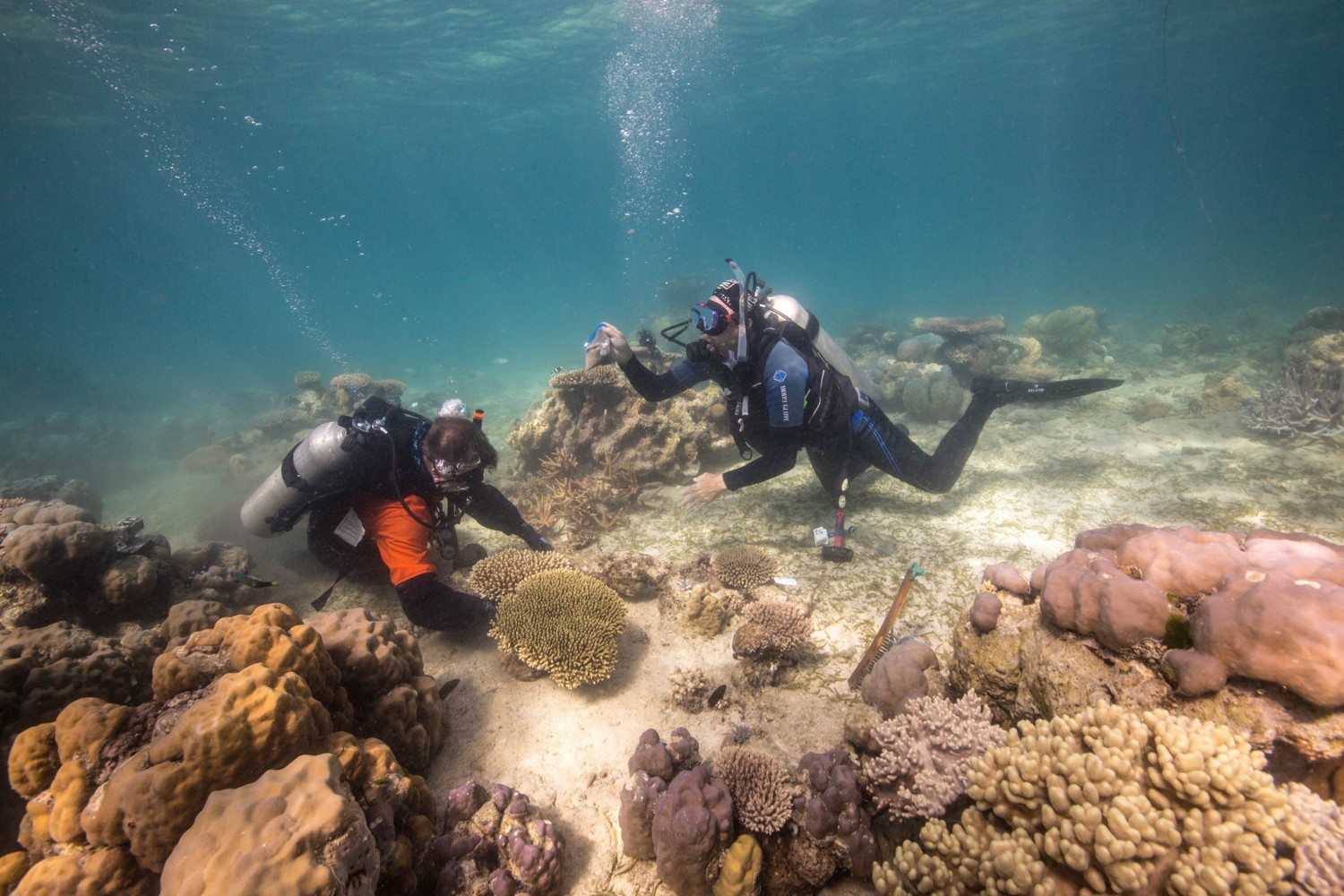
Removing corals
-
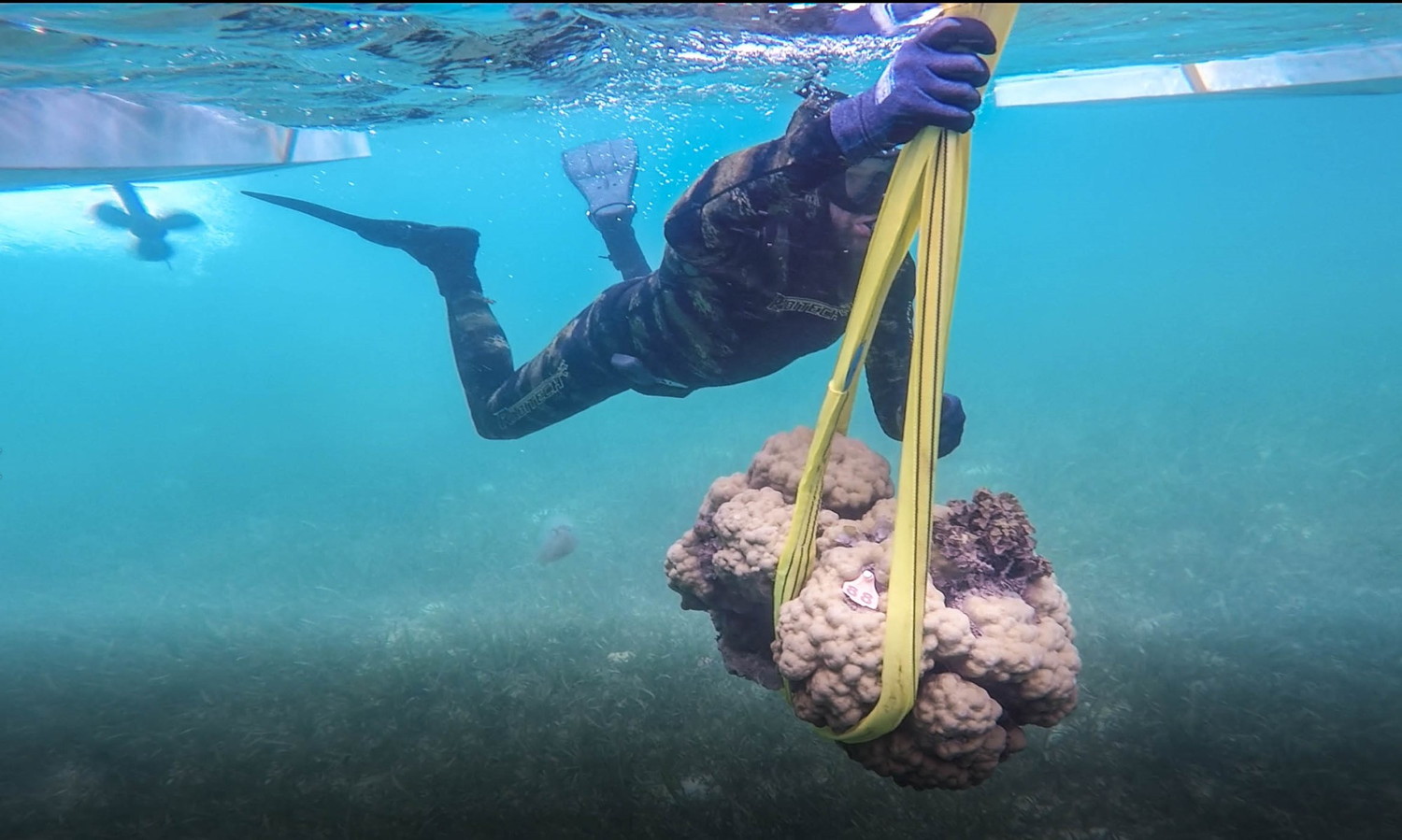
Coral relocation
East Japan Branch
■ In accordance with the Rare Wild Flora and Fauna Information provided by the Fukushima Prefectural Nature Conservation Division, we transplanted key plant species (Ebine orchid) growing within the planned solar panel installation area of a photovoltaic facility in Nishigō Village, Nishishirakawa District, Fukushima Prefecture, to remaining green zones in order to preserve the natural environment.
(Nishishirakawa District Solar Project Site)
■ At one of our work sites overlapping an osprey nesting area, we carried out a two-day conditioning process before beginning major construction. Heavy machinery was staged and activated in phases to minimize disturbance and protect the birds’ breeding activities.
(Chitei Yōno Improvement Work Site)
(Nishishirakawa District Solar Project Site)
■ At one of our work sites overlapping an osprey nesting area, we carried out a two-day conditioning process before beginning major construction. Heavy machinery was staged and activated in phases to minimize disturbance and protect the birds’ breeding activities.
(Chitei Yōno Improvement Work Site)
-
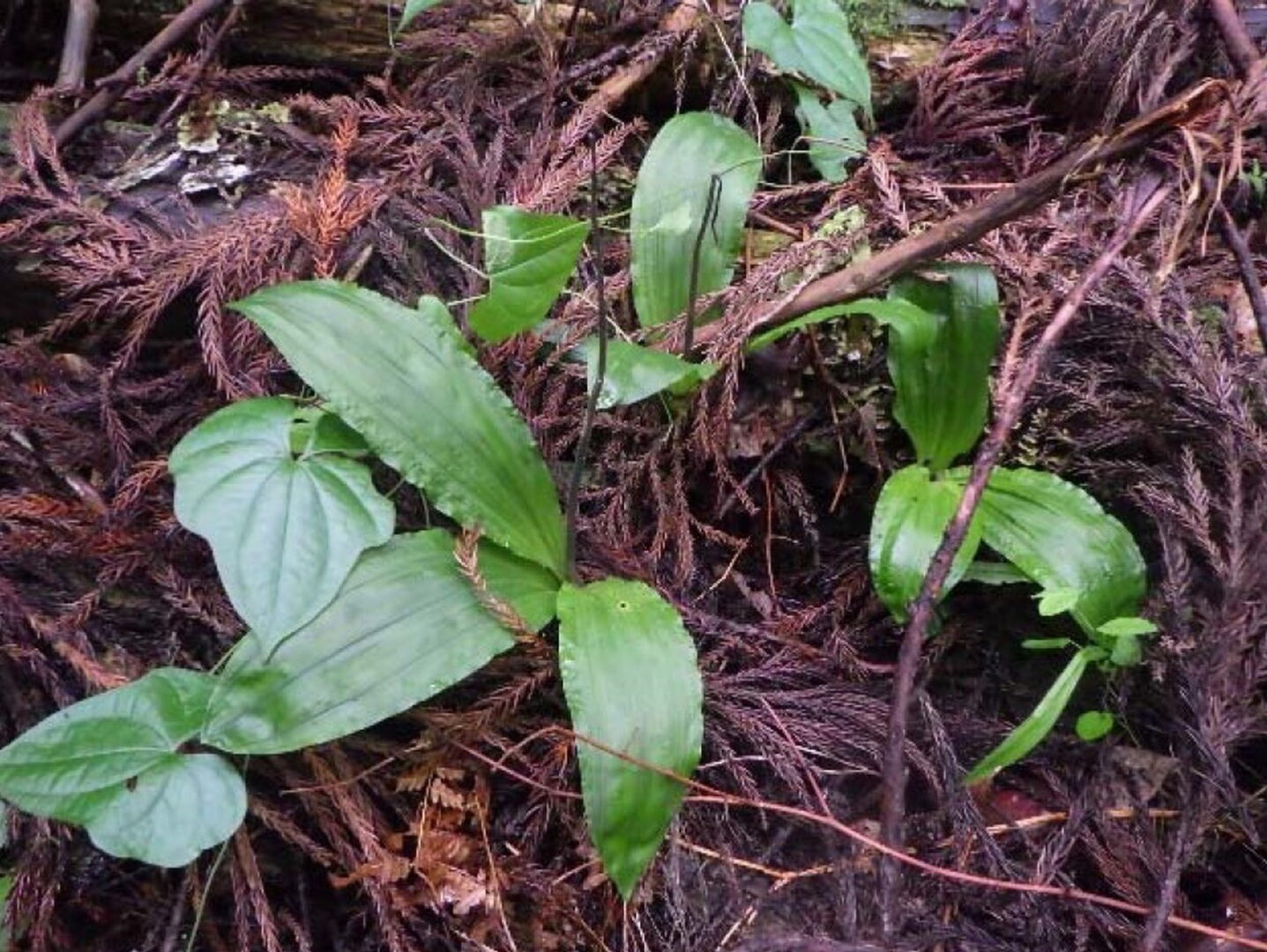
Calanthe
-
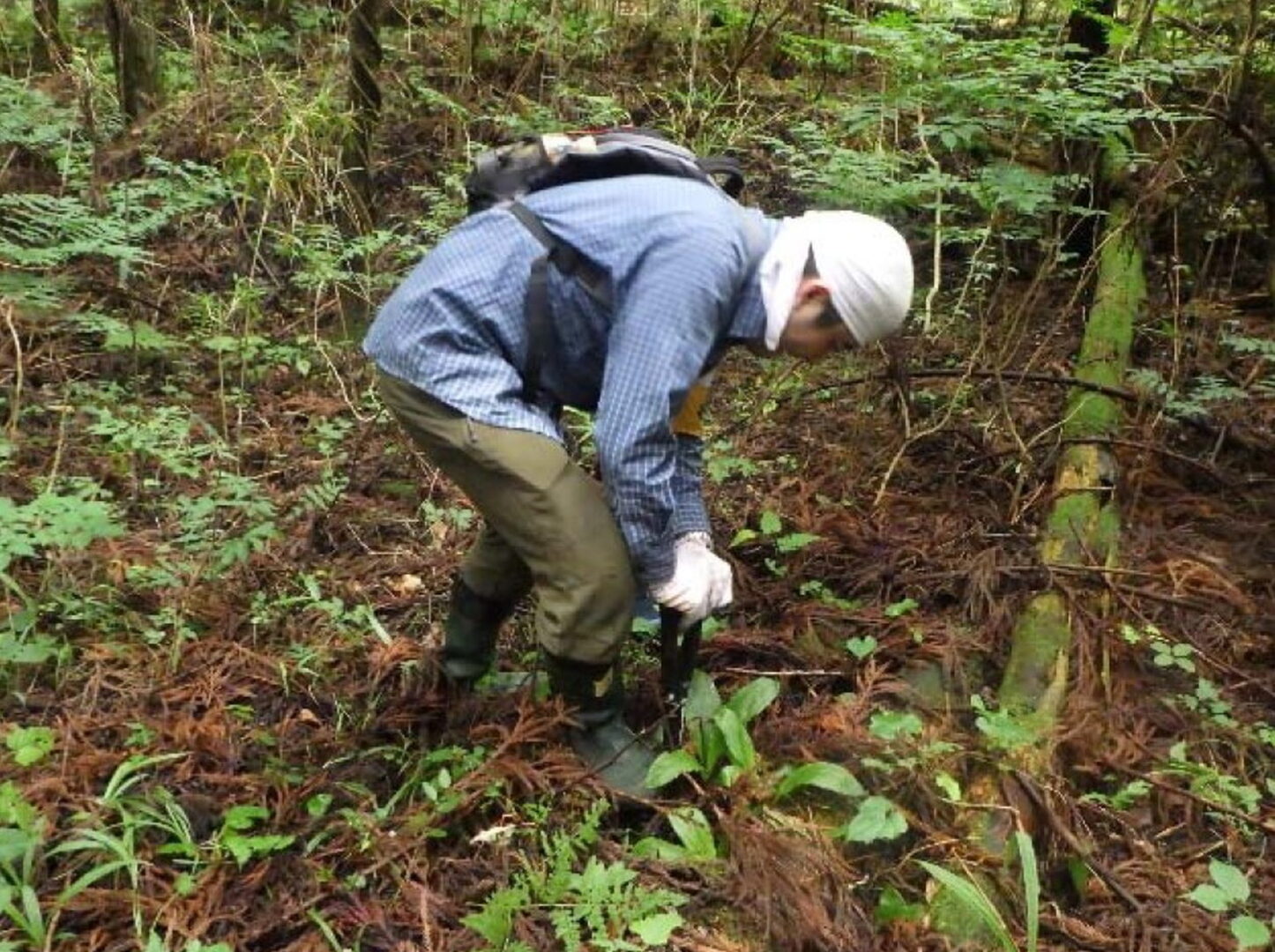
Excavation on site
-
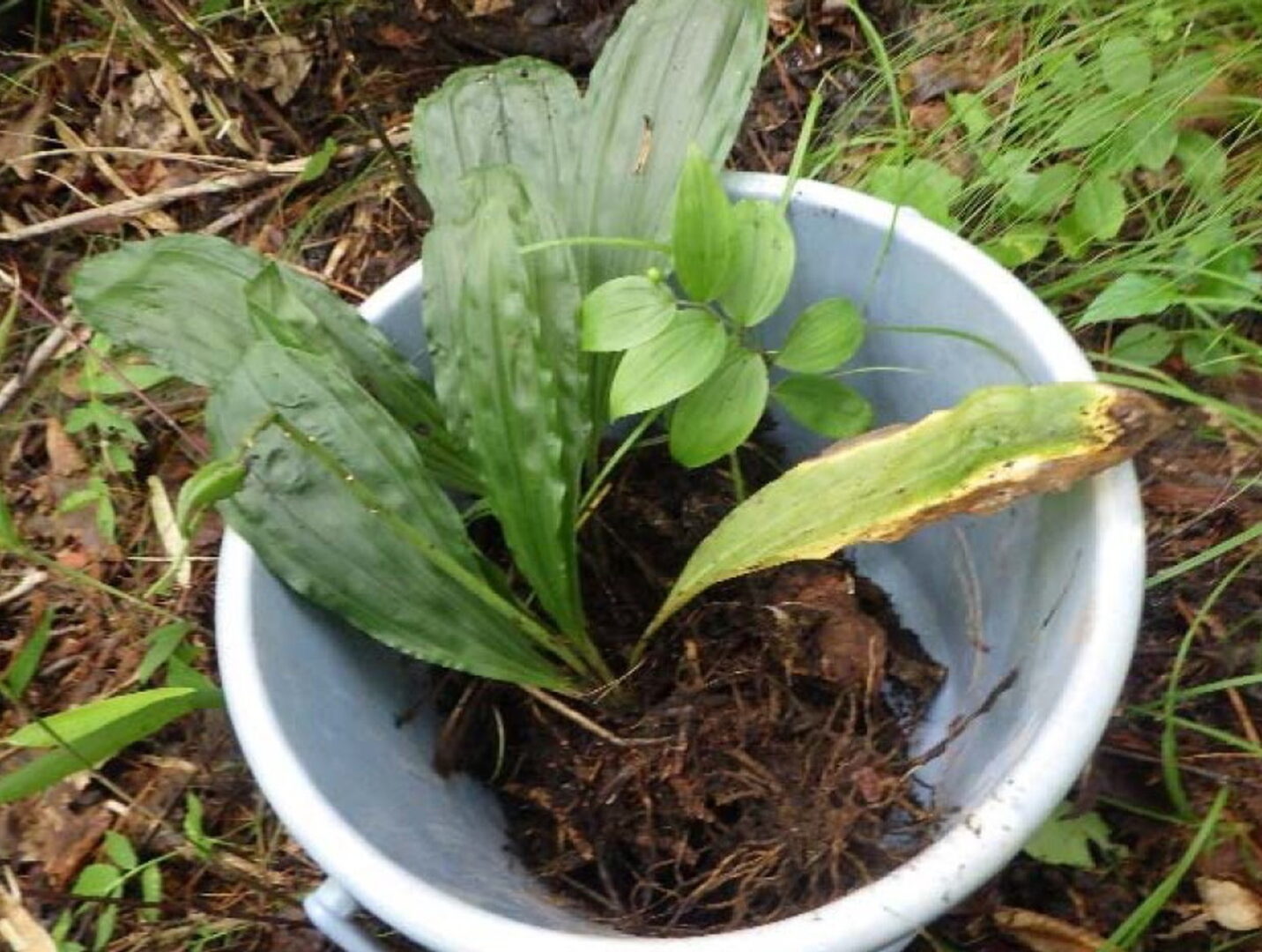
Bucket storage
-
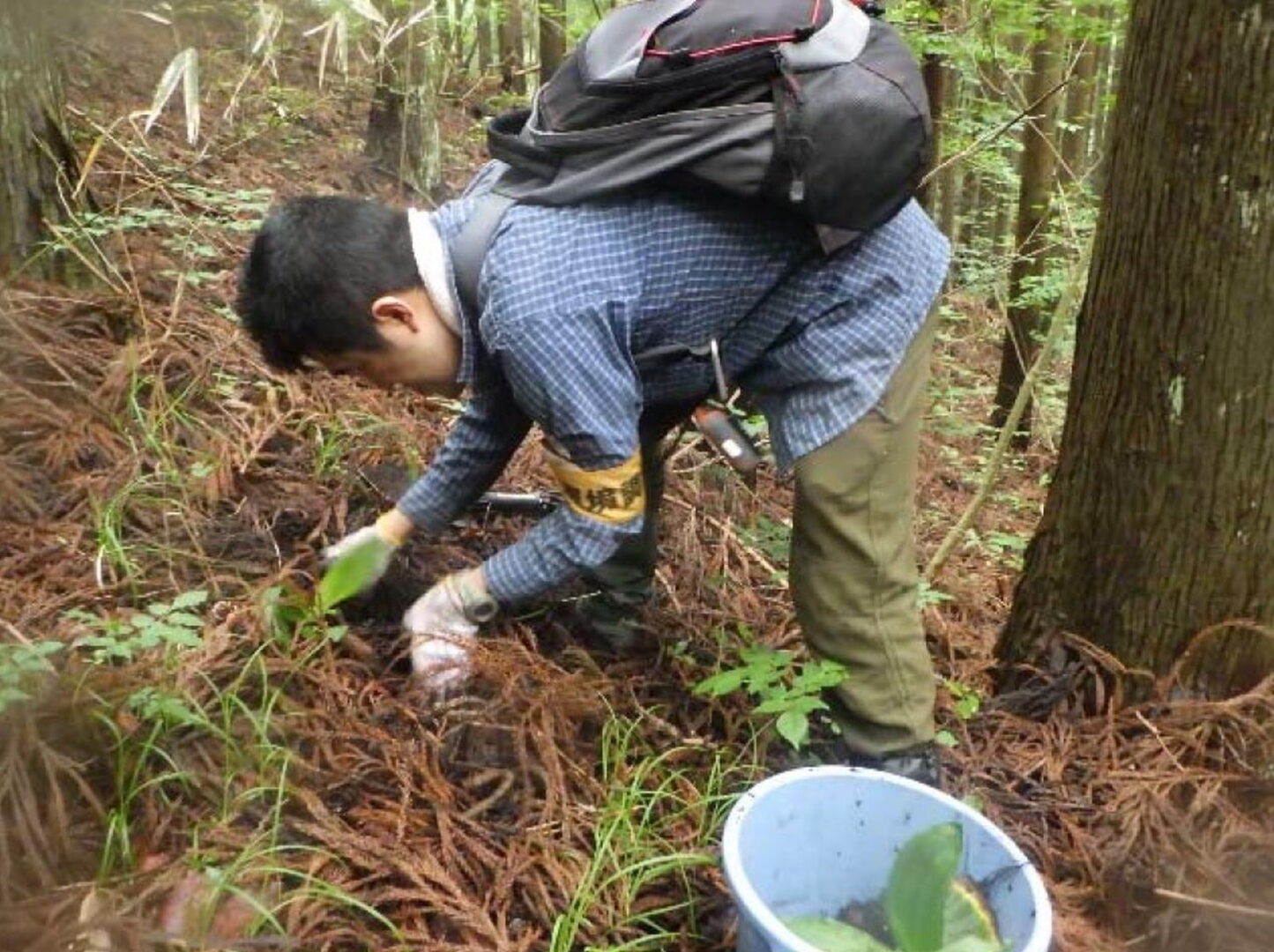
Transplanting to remaining green spaces
Central Japan Branch
In the floodplain of the Nagara River, we collected Kawarahahako—a rare plant now listed as endangered in multiple areas—and transplanted it to the rooftop green space of the new Gifu City Hall under construction.
(Gifu City New City Hall Worksite)
(Gifu City New City Hall Worksite)
-
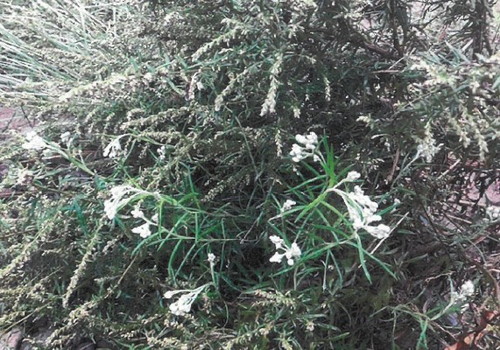
A flock of Japanese bush warblers gather on the banks of the Nagara River
-
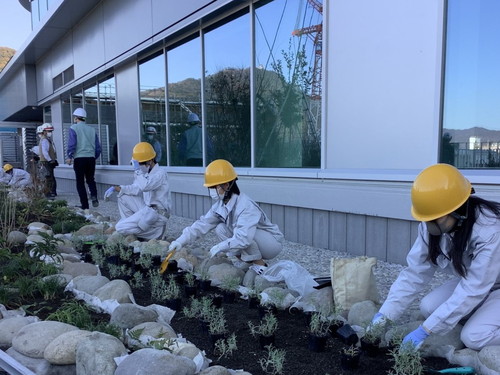
A Japanese quince tree was transplanted to the new Gifu City Hall, currently under construction.
-
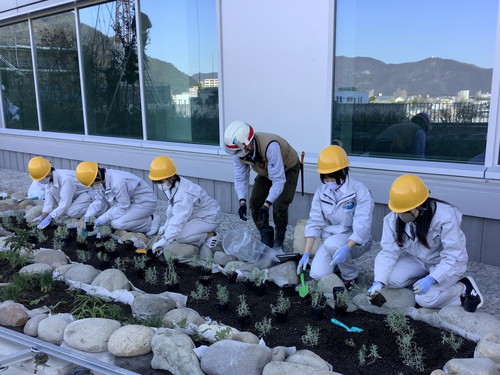
A Japanese quince tree was transplanted to the new Gifu City Hall, currently under construction.
-
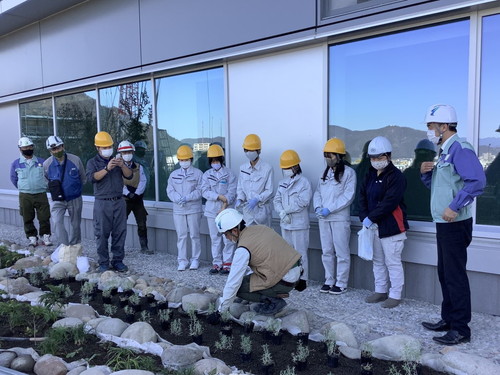
A Japanese quince tree was transplanted to the new Gifu City Hall, currently under construction.
■ During the nesting season of the rare mountain hawk-eagle at the Uchitani Dam worksite in Gifu Prefecture, we conducted controlled blasting for excavation and used high-pressure sodium lamps with louvers for nighttime lighting instead of mercury vapor lamps. Additionally, ultraviolet-cut film was applied to the headlights of construction vehicles to minimize disturbance.
■ To protect mountain hawk-eagles around the Gerogawa-kami T worksite in Gifu Prefecture, all lighting fixtures were equipped with hooded louvers to prevent light spill. Traditional mercury vapor lamps had drawn and killed moths and beetles, reducing prey for raptors such as frogs and lizards and disrupting the food chain. By switching to LED lighting, we significantly cut down on the insects attracted to our worksite lights.
■ At the Shin-Aiki Bridge Pier worksite in Gifu Prefecture, we partnered with the local river fisheries cooperative to release juvenile ayu (sweetfish) into the river, thereby promoting riverine habitat restoration and overall ecosystem protection.
■ To protect mountain hawk-eagles around the Gerogawa-kami T worksite in Gifu Prefecture, all lighting fixtures were equipped with hooded louvers to prevent light spill. Traditional mercury vapor lamps had drawn and killed moths and beetles, reducing prey for raptors such as frogs and lizards and disrupting the food chain. By switching to LED lighting, we significantly cut down on the insects attracted to our worksite lights.
■ At the Shin-Aiki Bridge Pier worksite in Gifu Prefecture, we partnered with the local river fisheries cooperative to release juvenile ayu (sweetfish) into the river, thereby promoting riverine habitat restoration and overall ecosystem protection.
-
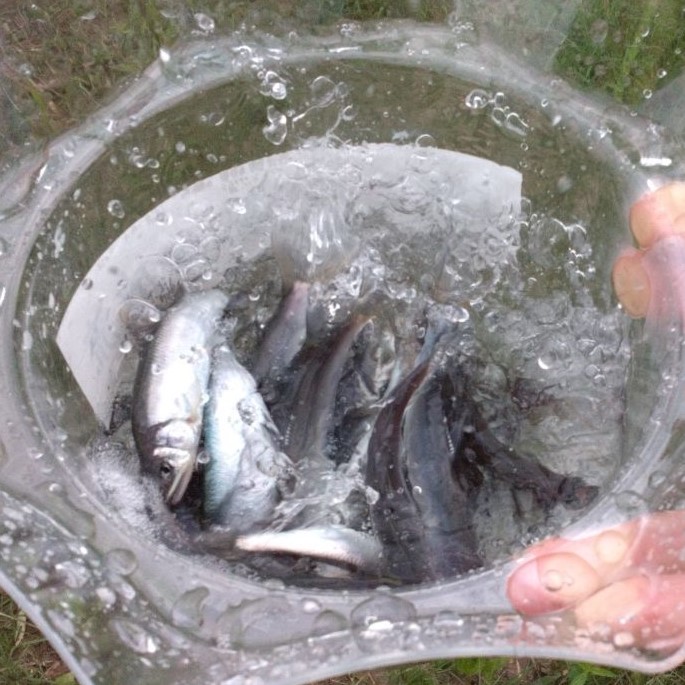
Release of young sweetfish
-
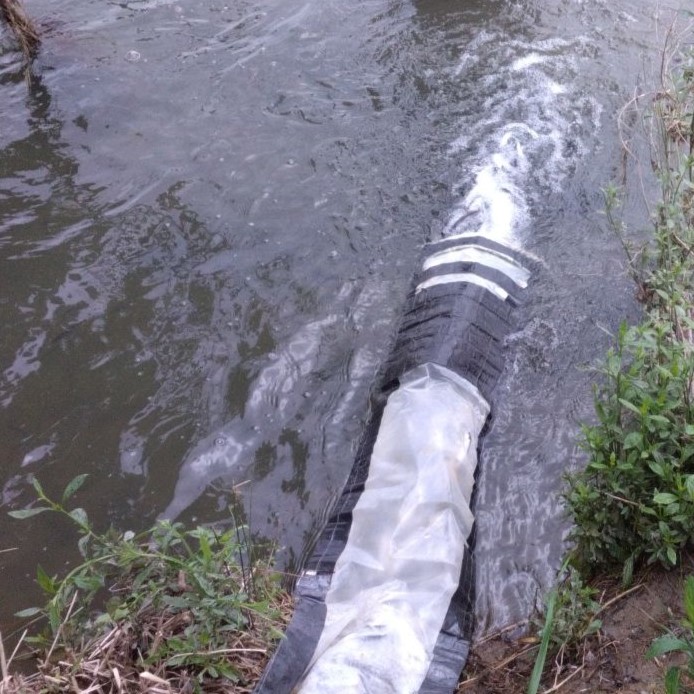
Release of young sweetfish
-
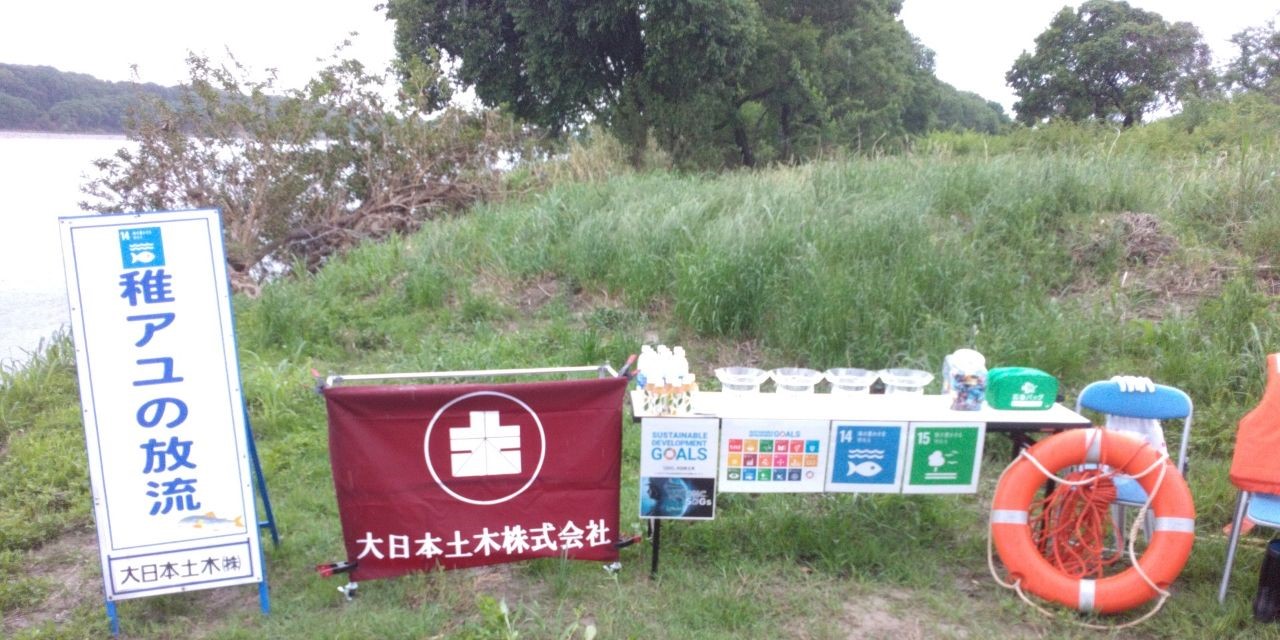
Release of young sweetfish
West Japan Branch
■ We transplanted rare plant species—including Arisan dewberry and others—from within the construction area, and conducted biannual ecological surveys of the Kagura bat population inhabiting nearby zones.
(Bōei Yonaguni G Worksite)
■ Under Japan’s Wildlife Protection Act, capturing wild animals, collecting eggs, or causing injury is prohibited; if chicks or eggs are found, they must be left undisturbed until the breeding period ends. For this project, we strung monofilament lines and installed bird-deterrent streamers in the work zone before construction to discourage little terns from nesting inside the site and to secure nesting areas outside the zone—thereby safeguarding reproduction.
(Naha Runway Expansion Worksite)
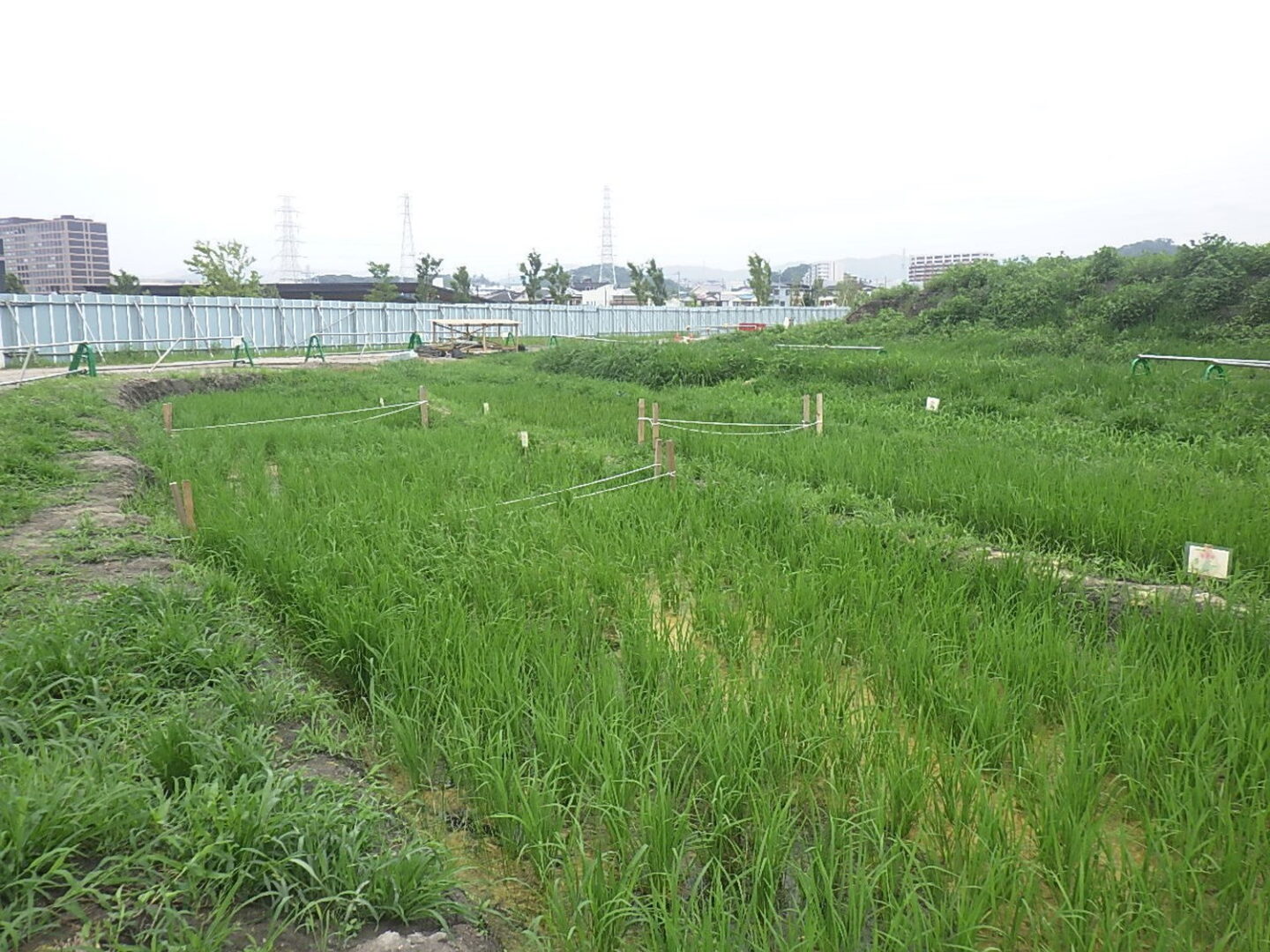
■ Within the site, Amman Hito Club (安満人倶楽部) is cultivating heritage rice. Our worksite created temporary paddy fields to support this community activity.
(Takatsuki Historic Park Worksite)
(Bōei Yonaguni G Worksite)
■ Under Japan’s Wildlife Protection Act, capturing wild animals, collecting eggs, or causing injury is prohibited; if chicks or eggs are found, they must be left undisturbed until the breeding period ends. For this project, we strung monofilament lines and installed bird-deterrent streamers in the work zone before construction to discourage little terns from nesting inside the site and to secure nesting areas outside the zone—thereby safeguarding reproduction.
(Naha Runway Expansion Worksite)
■ Within the site, Amman Hito Club (安満人倶楽部) is cultivating heritage rice. Our worksite created temporary paddy fields to support this community activity.
(Takatsuki Historic Park Worksite)
-
A flock of Japanese bush warblers gather on the banks of the Nagara River